



Polynucleotides
Medical Spa Rx brings together PN and PDRN injectables for licensed practitioners comparing skin-quality products. Formulations differ in concentration, molecular characteristics, and intended use for facial, under-eye, and selected scalp applications. Review the product listings to compare brands and buy polynucleotides online after checking the relevant clinical documentation and regulatory status. The catalog supports individual and bulk orders for professional practices.
Find More with Just a Click!
Can’t spot what you need in our catalog? Fret not–just sign up for our expert consultations. We will provide the insights you need. We're here to guide you to your clinic's potential; no product browsing needed
Showing 1–12 of 15 results



Other information
What Are Polynucleotides – And Why Are Practitioners Comparing Them Online?
Polynucleotides (PN) and polydeoxyribonucleotides (PDRN) are DNA-derived materials, commonly purified from salmon or trout sources, that are incorporated into selected injectable skin treatments. Clinics may encounter PN and PDRN products intended for facial or periocular skin-quality applications, but the supporting research and authorized uses are not necessarily interchangeable across formulations. Research has explored tissue-repair mechanisms, particularly for PDRN, although the findings do not establish identical effects across all PN and PDRN products [1][2]. Clinical applications depend on the formulation, supporting evidence, and relevant product instructions.
Comparing products requires more than checking a brand name. Before selecting a formulation, consider molecular characteristics, concentration, additional ingredients, and intended treatment areas.
Polynucleotides vs Skin Boosters and Mesotherapy – Which Should Practitioners Order?
When comparing injectable skin boosters, polynucleotides, and mesotherapy products, practitioners should consider the intended treatment objective and the individual formulation rather than treating these categories as interchangeable.
PDRN research has investigated adenosine A2A receptor signaling and other processes involved in tissue repair [2]. Aesthetic PN formulations may differ in molecular characteristics and biological behavior, so these findings should not be assumed to apply identically across the category.
Hyaluronic acid-based skin boosters primarily support hydration through HA’s water-binding properties, which may improve skin smoothness and surface appearance. Their effects differ from the tissue-repair mechanisms investigated in PDRN research.
Mesotherapy is an injection approach rather than a single, uniform formulation. Preparations may contain vitamins, amino acids, hyaluronic acid, or other ingredients, so their clinical applications and effects depend on the substances administered.
These treatments serve different purposes and may be considered together when appropriate for a patient’s clinical needs. HA-based fillers intended for structural or volumizing correction belong to a separate category; licensed practices can buy dermal fillers online through Medical Spa Rx when selecting products for those treatment objectives.
Legal Status and FDA Approval – What Practitioners Need to Know Before Ordering
Regulatory documentation should be reviewed before selecting a PN or PDRN product for clinical use. Authorization depends on the finished formulation, its intended purpose, and the jurisdiction in which treatment is performed.
European conformity requirements and US FDA authorization are separate regulatory frameworks. A CE marking or overseas marketing claim does not establish FDA approval for aesthetic injection. Practitioners should verify the specific product’s applicable conformity documentation, registration status, and permitted use rather than assuming that every PN or PDRN formulation shares the same classification [3].
Medical Spa Rx serves licensed medical and aesthetic professionals. Buyer eligibility, importation, and clinical administration must remain consistent with local requirements.
Types of Polynucleotides to Compare: PDRN, PN, and Korean Formulations
PN and PDRN are common product classifications, but manufacturers do not fully standardize their terminology and formulation characteristics.
- PDRN formulations: Generally associated with shorter DNA fragments, with research examining inflammatory signaling and tissue-repair processes. Findings from wound-healing studies should not be treated as proof of efficacy for every aesthetic indication [1].
- PN formulations: Often contain longer DNA polymers, although product terminology and molecular-weight ranges are not fully standardized. Clinical selection should be based on the finished formulation and its supporting documentation.
- Korean polynucleotides: Korean manufacturers contribute to this category, but country of origin does not establish clinical quality, CE conformity, or regulatory authorization. Practitioners should evaluate each product’s evidence, formulation, and market-specific status.
Compare Before You Buy Polynucleotides on Medical Spa Rx
Medical Spa Rx lists CROMA, NUCLEOFILL™, and PLINEST® products for professional comparison. Clinics can review individual formulations, intended applications, and product documentation before choosing to buy PDRN injectables for a treatment plan.
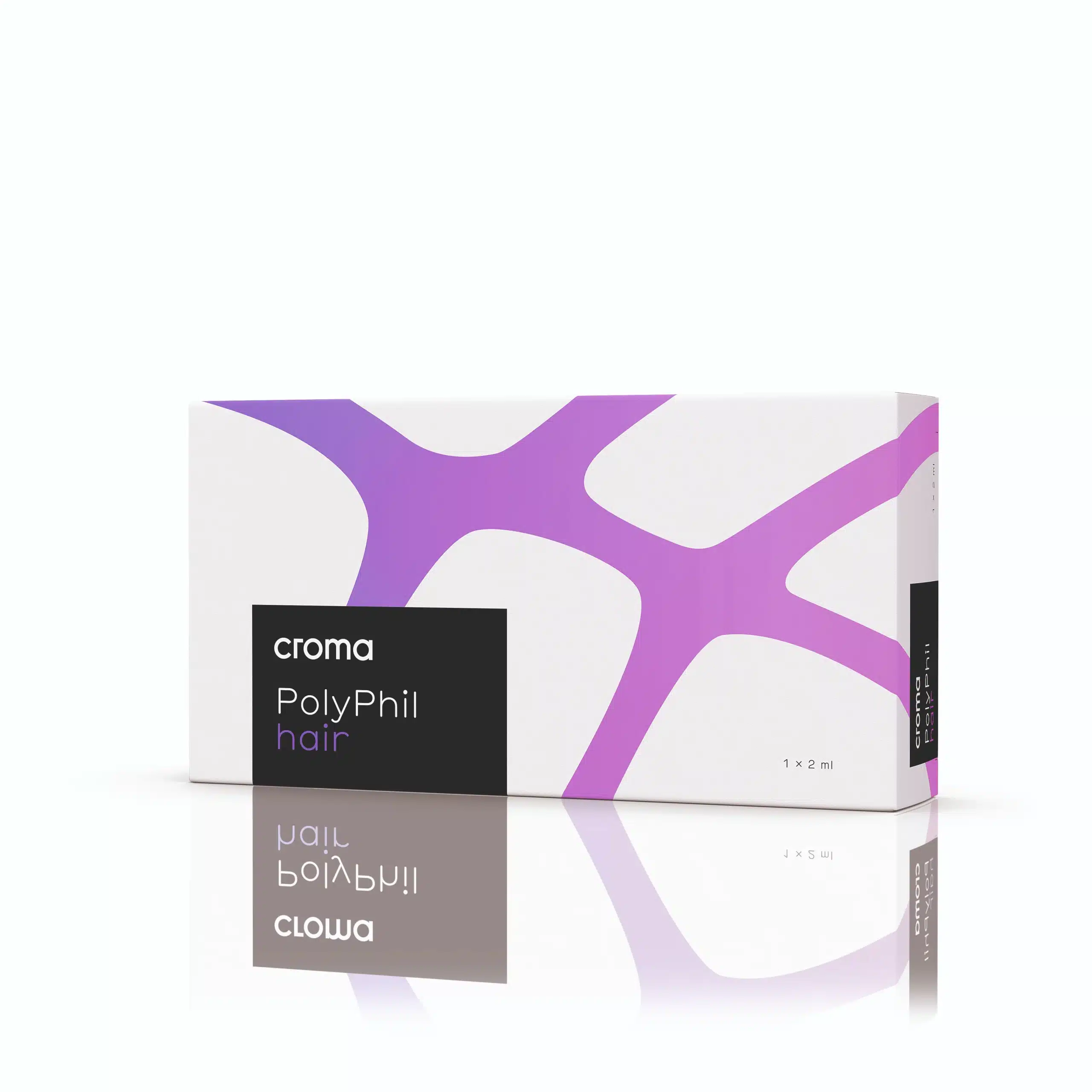
POLYPHIL™ NEXT combines polynucleotides with hyaluronic acid, while EYE and HAIR are separate presentations for different applications. These distinctions matter when a clinic chooses to buy CROMA for a specific treatment objective.
Clinics can buy NUCLEOFILL™ in several presentations, including Soft Plus, Medium, Medium Plus, and Strong. Clinics should assess the selected formulation against the manufacturer’s documentation rather than assuming these names reflect a universal ranking of clinical effectiveness.
EYE, FAST, and HAIR are among the specialized presentations within the PLINEST® PN-HPT® portfolio. Clinics planning to buy PLINEST® should assess each product’s intended use and manufacturer guidance rather than assume these formulations are interchangeable.
When comparing brands, consider pack size, formulation, regulatory documentation, and manufacturer instructions rather than concentration or brand familiarity alone.
Conditions Treated and Where Polynucleotides Are Administered
Polynucleotide injections are used or investigated for several treatment areas, depending on the formulation and clinical objective. Technique and treatment planning vary by product and patient; the following are examples of applications discussed in aesthetic practice.
- Under the eyes: Selected PN formulations have been studied for improvements in periocular skin texture, elasticity, and wrinkles. Benefits for thin or crepey skin should not be equated with correction of tear-trough volume loss. Product-specific instructions and the patient’s anatomy should guide suitability [5].
- Face and neck: Polynucleotides are widely used to improve skin quality across the face and neck, supporting regeneration and, over time, leading to smoother texture, improved elasticity, softer fine lines, and a healthier appearance.
- Hair and scalp: PDRN has been investigated in selected scalp-treatment protocols, including small studies of female-pattern hair loss. Evidence for hair-growth outcomes remains preliminary, and use should be evaluated against the formulation’s intended application and supporting clinical research [5].
Dosage, Protocols, and Results Timeline
Most polynucleotide treatments follow a planned series of sessions rather than a one-time procedure. The exact schedule depends on the product being used, the treatment area, and the patient’s skin condition and goals.
- Treatment course: Published PN protocols vary in session number, dosing, and intervals. A schedule used for one formulation or treatment area should not be treated as the standard for all PN and PDRN products.
- Results and follow-up: Some studies report gradual improvements in skin texture and elasticity, but follow-up periods are often limited and do not establish a universal timeline or duration of benefit [5].
- Inventory planning: Clinics preparing to order polynucleotides for multi-session care should base quantities on the relevant manufacturer’s instructions, pack size, planned dose, and patient-specific treatment schedule.
What Outcomes Does the Clinical Evidence Support?
Clinical studies have examined outcomes such as skin elasticity, texture, and wrinkle appearance, although findings vary across PN formulations and study designs. [4][5]
- Potential dermal remodeling: Experimental research has explored effects on fibroblast activity and extracellular-matrix components, but clinical improvements vary by formulation and available evidence.
- May reduce the appearance of wrinkles: Some studies report improvements in fine lines and wrinkle appearance, although outcomes vary by formulation and study design. [5]
- May improve selected under-eye concerns: Some studies report improvements in periocular skin texture and fine lines, but suitability depends on the formulation and individual anatomy. [5]
- Investigational scalp applications: PDRN has been studied in selected hair-loss protocols, although evidence remains insufficient to establish consistent benefit across formulations.
Recovery and treatment response vary by formulation, injection technique, and treatment area. Published aesthetic studies report improvements in selected skin-quality outcomes, but the evidence does not establish a uniform recovery period or results timeline across all PN and PDRN injectables. [4][5]
Storage and Shipping Checks Before Ordering
Storage and transport requirements should be checked against the instructions for each PN or PDRN product. Temperature limits for one formulation must not automatically be applied to another, particularly when packaging and composition differ.
For each product, clinics should document the required transport conditions before arranging delivery. When the shipment arrives, verify the product identity, packaging integrity, expiry date, and any applicable temperature-control records against the order details. Follow the product’s single-use handling instructions, and do not retain opened units for another patient.
Price of Polynucleotides
Online price comparisons should account for the amount supplied per package, the formulation required, and any quantity-based discounts. Do not interpret price differences between manufacturers as proof of clinical equivalence or superiority.
When practices order polynucleotides for multiple patients, course estimates should account for product-specific dosing and session requirements rather than a fixed treatment schedule. Clinics that buy polynucleotides wholesale can compare listed prices and pack quantities in the product grid before making procurement decisions.
Polynucleotides Side Effects and Precautions
Published studies of aesthetic PN treatments generally report mild, temporary injection-site reactions. However, small study populations and limited follow-up make it difficult to assess uncommon adverse events reliably [5]. Product-specific screening remains essential before treatment.
- Common reactions: Redness, swelling, bruising, tenderness, and temporary discomfort at the injection site.
- Vascular complications: Available evidence does not establish a reliable comparative risk of vascular occlusion between PN products and volumizing fillers. Practitioners should use appropriate anatomical knowledge, injection technique, and complication-management procedures.
- Contraindications and precautions: Screening should consider hypersensitivity to the formulation or biological source, active infection, pregnancy or breastfeeding, and relevant medical conditions. These factors should be evaluated against the individual product’s instructions rather than treated as identical contraindications across all formulations.
Where to Buy Polynucleotides Online – Medical Spa Rx
Medical Spa Rx provides licensed practitioners with a catalog of PN and PDRN products from several manufacturers. Brand-specific listings help clinics compare available presentations, concentrations, and intended applications before ordering.
Practitioners can purchase polynucleotides online after reviewing product information and purchasing requirements. For larger clinic orders, the support team can provide details on pricing, availability, and shipping.
Clinics looking to buy PDRN for a specific protocol can use the product grid to compare formulations, product documentation, and availability.
Frequently Asked Questions
What documentation matters when comparing PN brands online?
Practitioners should review product specifications, active components, concentration, intended applications, and manufacturer instructions. Supporting clinical evidence and regulatory documentation are also important, particularly when comparing formulations that use similar category names but differ in composition or intended use.
How does a PN and hyaluronic acid combination differ from a PN-only formulation?
Combination products contain both polynucleotides and hyaluronic acid, while PN-only formulations do not include HA as an additional active ingredient. Adding HA may affect hydration-related properties, but clinical benefits depend on the final formulation and supporting evidence.
Can PDRN wound-healing research establish an aesthetic product’s effectiveness?
Not automatically. Research into PDRN-mediated tissue repair helps explain scientific interest in these materials, but it does not establish the clinical effectiveness of every aesthetic PN or PDRN formulation. Practitioners should distinguish mechanistic and wound-healing findings from studies evaluating specific aesthetic products and outcomes. [1][4]
How should clinics compare eye, facial, and scalp presentations?
The intended treatment area should be supported by the individual product’s manufacturer documentation. Eye-focused products may differ in formulation from those designed for broader facial applications, while scalp products require their own assessment of indications and evidence. Product names alone are insufficient for determining suitability.
How can clinics estimate stock for a multi-session treatment course?
Start with the prescribed treatment plan, the manufacturer’s dosing instructions, and the amount supplied per package. Calculate the quantities required for the planned sessions without assuming that protocols for one PN or PDRN formulation apply to another. Confirm availability before scheduling treatments that depend on multiple sessions.
What should practitioners check when assessing a product’s CE marking?
Request the applicable EU conformity documentation and confirm that it identifies the correct manufacturer and finished product. Where notified-body involvement is required, practitioners should also review the relevant certification details. Do not interpret CE marking as FDA approval or as evidence of authorization in every market.
How should clinics compare treatment-course costs between formulations?
Compare the quantity required per treatment, package size, expected session count, and applicable purchase pricing. A lower unit price does not necessarily produce a lower treatment-course cost. Clinics should also consider each formulation’s suitability and supporting documentation.
Can licensed clinics place individual and bulk orders through Medical Spa Rx?
Licensed practices can purchase polynucleotides through Medical Spa Rx’s online catalog after reviewing individual product details and purchasing requirements. For bulk orders, clinics can contact the support team to confirm pricing and availability.
The page and all of its displayed contents are for medical professionals, designed to inform only, and not as a replacement for medical advice.
Citations and Resources
[1] Galeano, Mariarosaria et al. “Polydeoxyribonucleotide: A Promising Biological Platform to Accelerate Impaired Skin Wound Healing.” Pharmaceuticals (Basel, Switzerland) vol. 14,11 1103. 29 Oct. 2021, doi:10.3390/ph14111103
[2] Squadrito, Francesco et al. “Pharmacological Activity and Clinical Use of PDRN.” Frontiers in pharmacology vol. 8 224. 26 Apr. 2017, doi:10.3389/fphar.2017.00224
[3] European Medicines Agency. “Medical Devices.” European Medicines Agency, updated 15 Apr. 2026, www.ema.europa.eu/en/human-regulatory-overview/medical-devices.
[4] Lee, Kar Wai Alvin et al. “Polynucleotides in Aesthetic Medicine: A Review of Current Practices and Perceived Effectiveness.” International journal of molecular sciences vol. 25,15 8224. 27 Jul. 2024, doi:10.3390/ijms25158224
[5] Lampridou, Smaragda et al. “The Effectiveness of Polynucleotides in Esthetic Medicine: A Systematic Review.” Journal of cosmetic dermatology vol. 24,2 (2025): e16721. doi:10.1111/jocd.16721
Top Polynucleotides brands
We work with leading international brands specializing in Polynucleotides , selected for their clinical reliability, regulatory compliance, and consistent treatment outcomes. These are our most recommended suggestions:
Written and reviewed by the Medical Spa Rx Editorial Team
All clinical and product claims on this page have been checked against peer-reviewed research, manufacturer data, and regulatory sources in accordance with our Editorial Policy .
Authenticity matters.
-
Licensed sourcing channels
-
Original manufacturer packaging
-
Careful order fulfillment
At Medical Spa Rx, we take product authenticity seriously. Read about our commitment to genuine products.